Today is the last installment of a three-part series: Marfan Through the Eyes of the “Unaffected.” You’ve read my story, but what about how Marfan has affected those around me?
Over New Years Mark, the baby, and I met one of my college girlfriends and her fiancée for lunch. This friend has chronic pain, worse than mine, and at one point during the meal gestured to her fiancée and remarked “Yah, I don’t even know why he’s marrying me!” Her fiancée pointed at Mark and said, “Well, he married her!”
And that got me thinking…why did Mark marry me? [I mean, besides love and all that jazz.] How did he/does he view Marfan that makes him want to stay, when it’s made other guys run away? And from there, I wondered about the effects on my other family members growing up. Aside from the medical bills (OH, those bills!), we never really discussed the impact my illness had on them.
You’ve heard from my mother and my brother. So, today I bring you my fantastic husband, Mark.
Mark and I met over 6 years ago, in college marching band, and were dating within 3 months. He was the very cutest trumpet player and leader of the band cheers. These days he’s an analog integrated circuit design engineer. In his spare time he enjoys building blocks with Menininho, experimenting in the kitchen, and playing Starcraft and TES4 Oblivion.
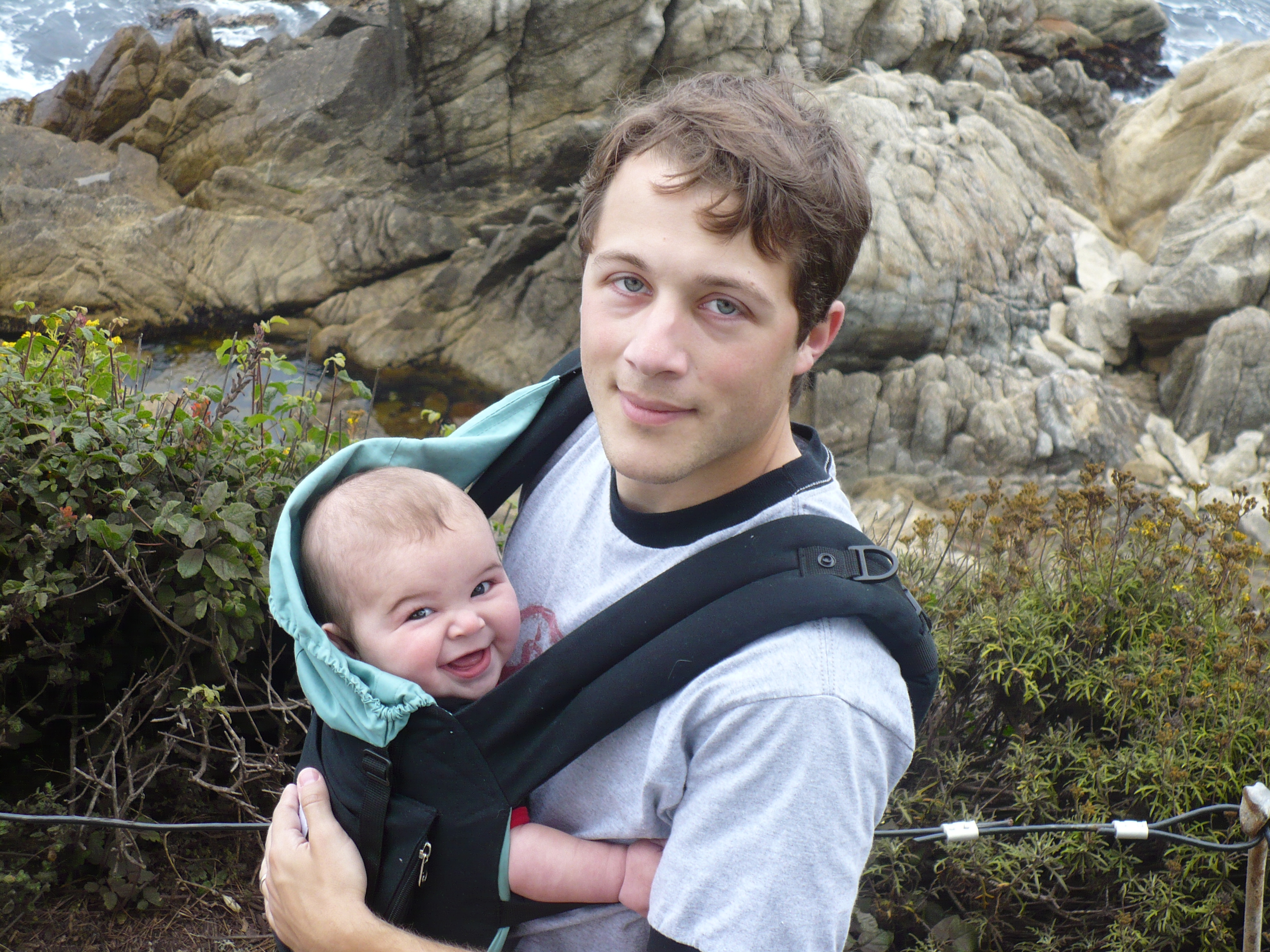 I always dated tall girls.
I mean, I was the shortest student my age all throughout elementary school, and the situation did not improve much in the following years. Pretty much everyone looked ‘tall’ to me. Nonetheless, I always dated tall girls.
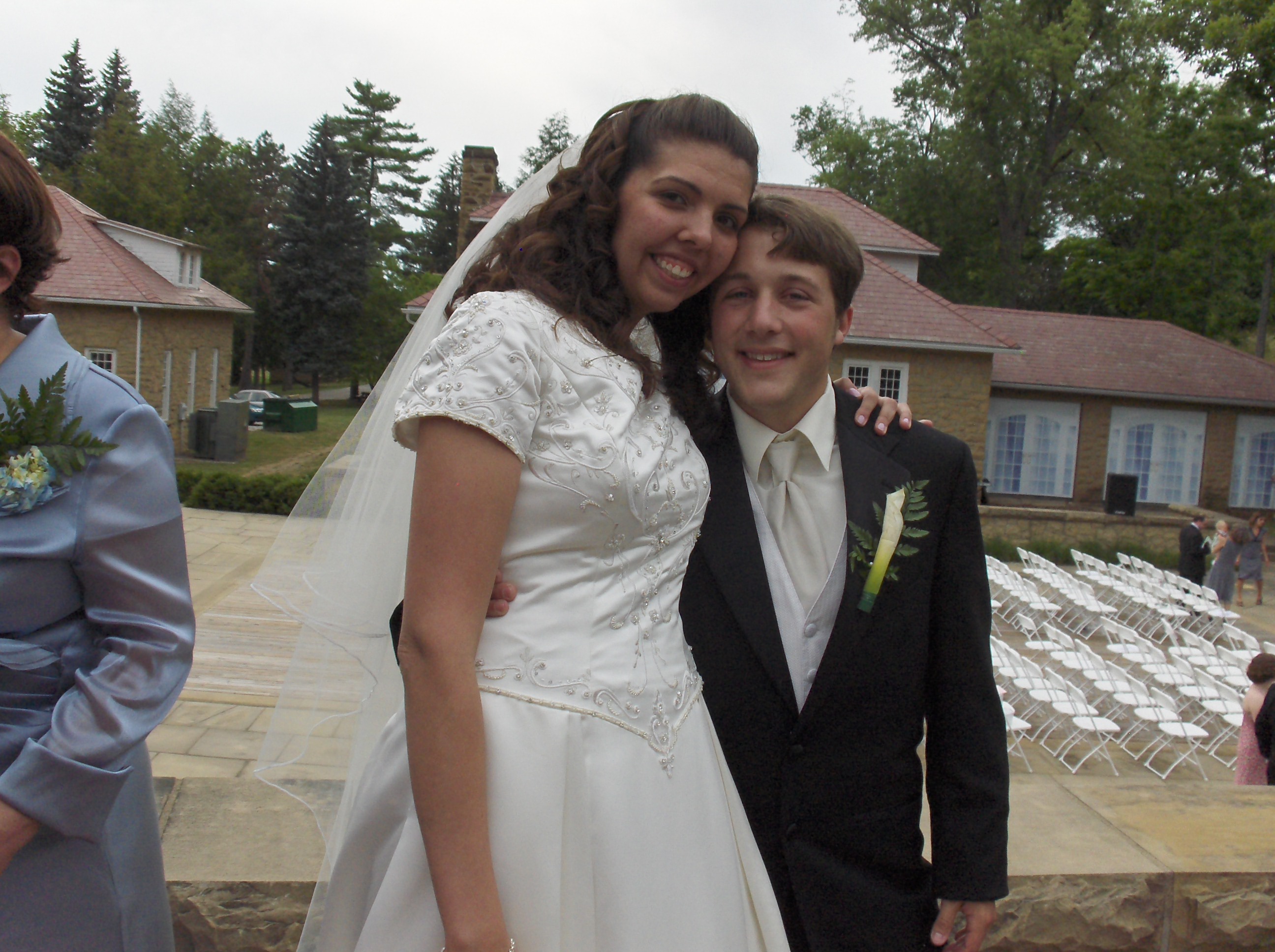
Therefore, pictures of Maya and I from some of our early dates, when she would show up in high heels and stand, literally, head and shoulders above me, really do not seem all that unusual.
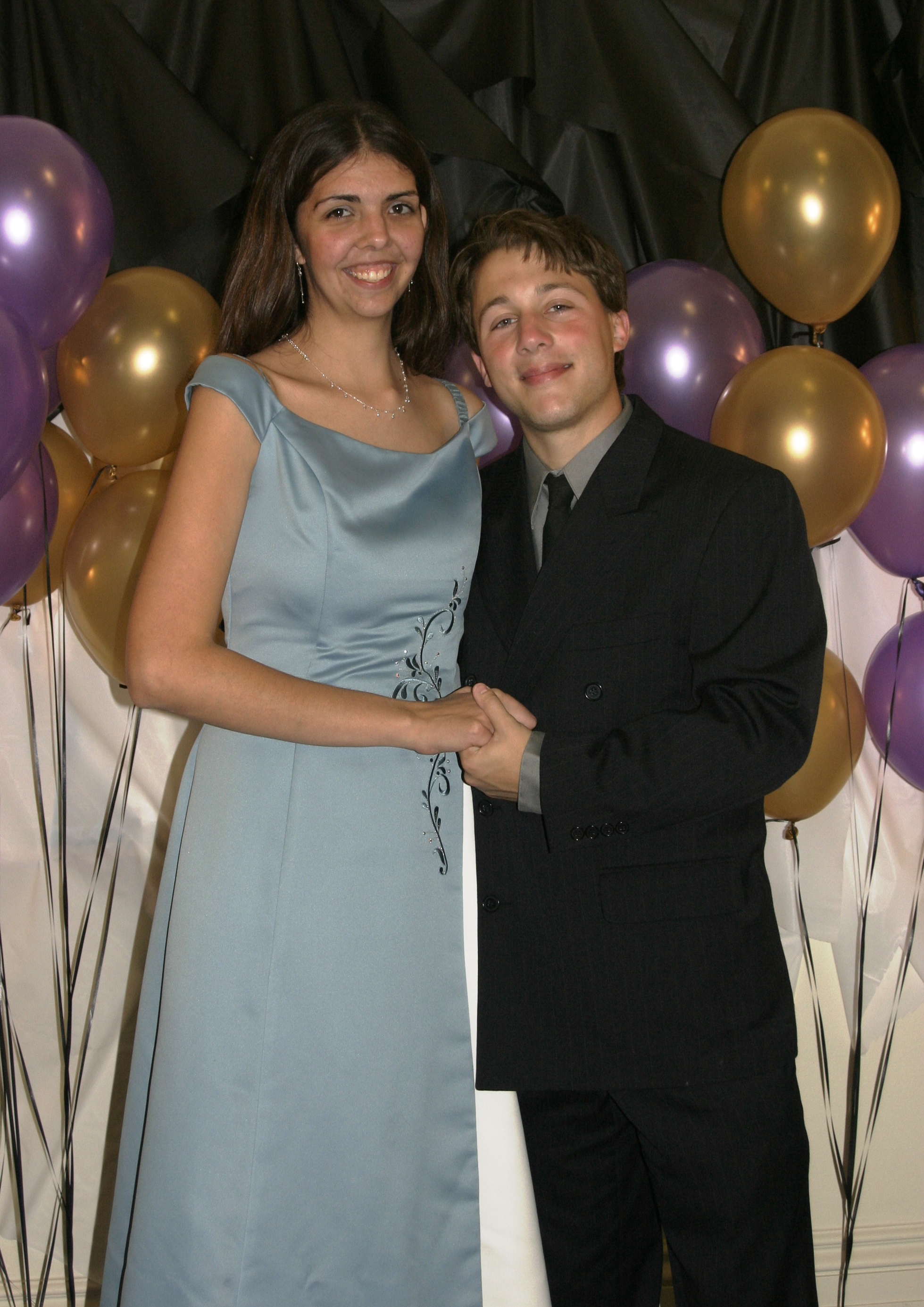
Homecoming 2005
I don’t remember when she first mentioned “Marfan Syndrome” (or, as I incorrectly called it for at least a year, “Marfan’s”), as it was never a game changer for me, just another data point. I certainly did my research, starting from Wikipedia. then going into greater detail, and reading up on resources from Johns Hopkins, The Mayo Clinic, and papers and publications by Hal Dietz. I wanted to be able to join dialogues between her and her doctors on an educated level, to be able to logically take and argue her side when a doctor brushed off an event, and to understand the many choices she made about her health.
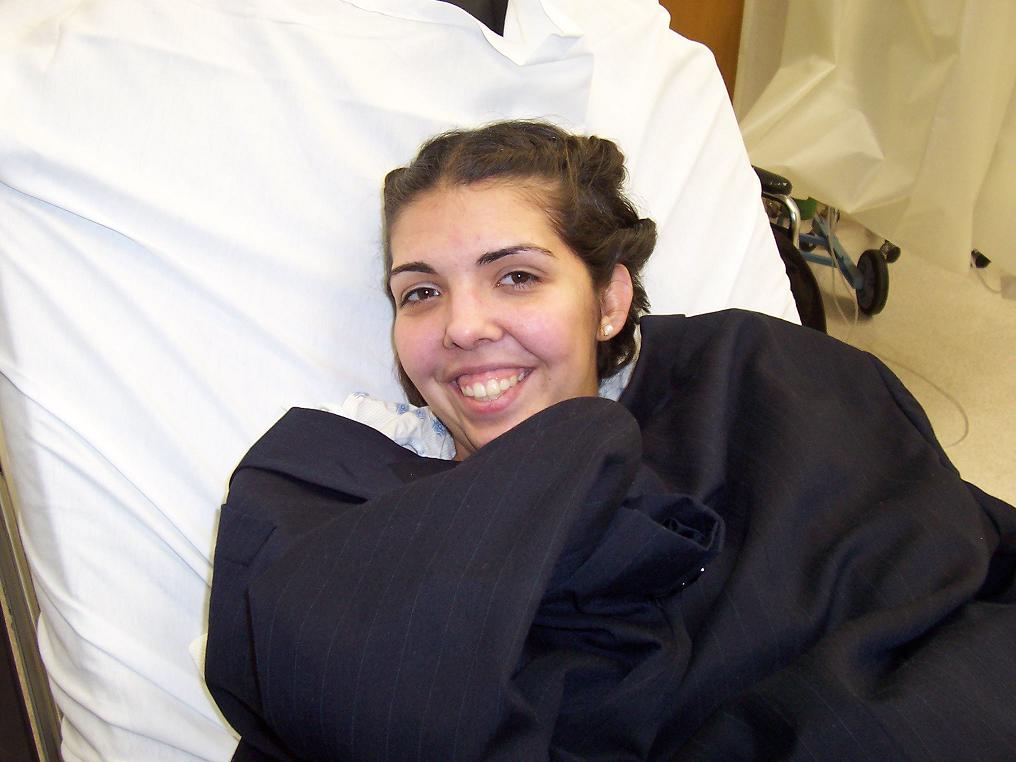
We hadn’t been dating too long (well… 2.5 years?) when our first emergency room trip together occurred. While dancing at our university’s winter formal in downtown Cleveland, Maya began to experience a rapid and arrhythmic heartbeat, which was recorded by her Holter Monitor. Maya was engaged in an extended effort to convince her doctors that these arrhythmic episodes were something worth looking at, rather than just an example of running-up-the-stairs-too-fast; so even as I helped Maya recover, we hurried to a phone to send the results to the hospital computer. The on-call, however, gave us a surprise, saying that there was “something unusual” and told us to report right away to the Cleveland Clinic Emergency Room. Though nothing came out of the late-night-became-morning visit and we never quite learned what “something unusual” meant, the following five hours waiting, talking, and playing card games in a room at the ER turned out to be one of our most memorable and most enjoyable dates.
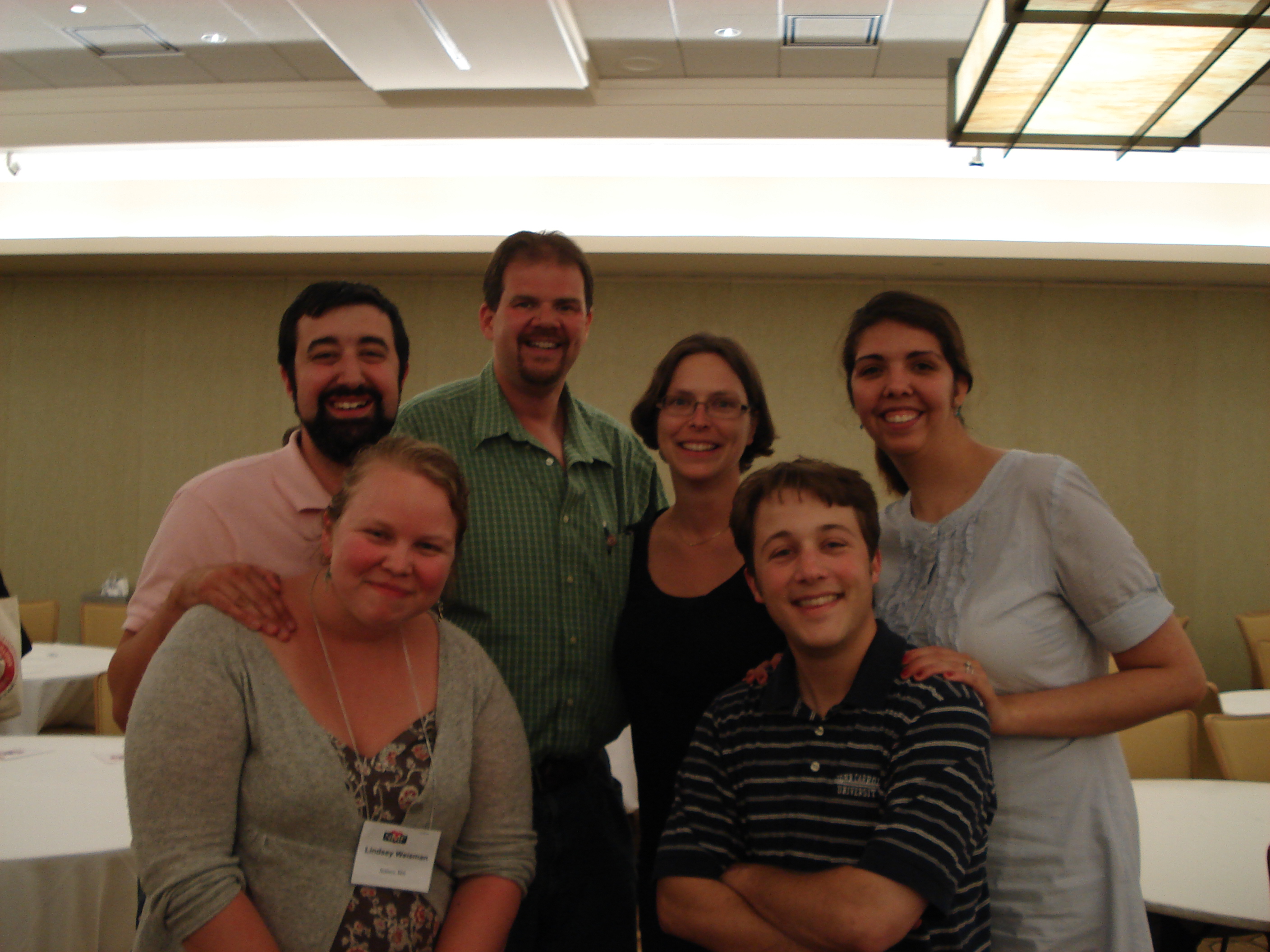
 “Conference” was a term I had heard used with reverence by Maya ever since I first learned of Marfan syndrome. Supposedly, it was a veritable Mecca in more ways than one for the Marfs… “Someday, you’ll get to see it, Mark”. Years later, I was taken along to meet the Marfamily at the annual National Marfan Foundation Conference which was held, that year, in Boston. Unbeknownst to me, the great Marfamiliy honors marital affinity–I was now married into this family as much as any “in-law”. I was certainly an outsider to this network of camaraderie stronger than that forged between my lab-mates in the trenches of 6 AM graduate school meetings, but invited nonetheless. They danced, discussed, met, and mingled, and I saw Maya naturally slide into her role as leader, older sister, and sometimes even mother of the hundred-odd middle- to high-school aged kids gathered in the teen program.
 But Marfan syndrome exists outside of the momentous occasions, as well.
Marfan syndrome’s activity restrictions have, over time, extended to the both of us in one way or another. We obviously do not hike winding trails and climb gorges like I did when I was younger, nor will long walks on the beach ever be a part of our repertoire. The opposite is true in other ways: As Maya has a limited ability to stand for long periods of time, I am on my feet from the moment I get home from work until well after the baby is asleep in bed.
Most unusual–to me, at least–is that Marfan syndrome seems to produce anger. I attended a support group for “unaffected spouses”, as they called us, at the Boston NMF Conference. The opinion there was fairly universal that the pain, limitations, and uncertainty of Marfan syndrome engendered a vague, undirected anger that seemed to creep into relationships. But, as has been mentioned by Maya’s mother and brother both, Maya began long ago and continues to take this anger and drive it, bit by bit, into her unending activism and defense of those persons and causes she takes under her wing.
We have had our share of scares from doctors, both from medical speculation (“I think she might not have Marfan Syndrome, but rather …. “), or right out misdiagnoses (“I think it’s a dissection! … oop. No it isn’t. Again.”), but they are events that we address as they come and pass as they go, rather than living in fear of them. When Maya’s geneticist speculated that she may have the life-threatening Vascular type of Ehlers-Danlos syndrome, I saw no reason why that should change the nature of our relationship. Maya and I approached the information with a similar stoicism, yet we still met the negative test results with a doubled sigh of relief.
It is because day to day life does not get to be put aside that we are able to continue; to get engaged in Washington DC, get married in Columbus, have a son, and begin to raise him in California.
Marfan syndrome makes every day harder than it could have been, but it is a part of who Maya is, through and through. And now, it is a part of me, too.
And I wouldn’t trade it for the world.